
If there’s one conversation I keep having with business owners, consultants, and trainers right now, it’s this:
“I know I should be using AI… but I genuinely don’t know where to begin.”
And to be fair, I completely understand why.
The conversation around AI can feel noisy, overwhelming, and, in many cases, unnecessarily complicated. One minute, you’re being told AI is going to transform your business overnight. Next, you’re watching tutorials filled with technical jargon about models, automations, APIs, workflows, and prompt engineering.
For someone simply trying to run a business, serve clients, or market themselves more effectively, that’s enough to make you switch off before you even begin.
The truth is, most people don’t struggle with AI because they lack ability.
They struggle because nobody explains where the practical starting point actually is.
The First Mistake Most People Make
When people decide they want to “get into AI,” the first question they usually ask is:
“Which AI tool should I use?”
It seems like a logical place to start.
Should it be ChatGPT? Claude? Gemini? Perplexity? Microsoft Copilot?
But in reality, that’s not the first question that matters.
Choosing a tool before identifying the actual problem is a bit like buying a toolbox before deciding what you’re trying to build.
AI is not the strategy.
AI is simply the assistant.
And assistants are only useful when they’re given clear direction.
That shift in thinking makes a huge difference.
Start With the Frustrations in Your Week
Rather than asking what AI can do in theory, a far better question is:
“What keeps slowing me down every single week?”
That’s where the opportunity sits.
Think about the repetitive tasks that drain your time and headspace:
- Writing social media content when you’re staring at a blank screen
- Turning rough ideas into something coherent
- Summarising meeting notes or workshop discussions
- Drafting repetitive emails
- Researching topics for newsletters, blogs, or presentations
- Brainstorming ideas for courses or client sessions
- Repurposing one piece of content into multiple formats
- Organising scattered thoughts into a clear structure
These are the kinds of tasks where AI can immediately become useful, not because they’re glamorous, but because they create friction and reducing friction is often where the quickest wins happen.
Don’t Start With Something Complicated
A lot of people assume the first step with AI should be something clever or advanced.An automated content machine, a chatbot a full workflow. Some impressive integration that saves ten hours a week.
But not at the beginning, in fact, I’d argue your first AI use case should be intentionally simple, even boring, because boring usually means practical and practical builds confidence.
A few examples:
- Ask AI to help rewrite an email
- Turn rough meeting notes into a summary
- Generate headline ideas for a LinkedIn article
- Create an outline for a training session
- Help improve wording on a webpage
- Brainstorm fresh angles for existing content
These are manageable starting points; you’re not trying to revolutionise your business overnight. You’re simply learning where AI can become a useful support tool.
A Practical Exercise to Try This Week
If you’re curious but unsure where to begin, here’s a simple exercise.
Take 10 minutes and write down every repetitive task you’ve done in the past week.
Don’t overthink it, just list them. Then highlight the ones that felt repetitive, mentally draining, or time-consuming.
Next, choose one single task from that list and ask:
“Could AI help me speed this up, organise it better, or give me a useful first draft?”
That’s your starting point, not five tools, not a full AI strategy, just one practical experiment.
AI Works Best as a Thinking Partner
One mistake I see often is treating AI like a vending machine. People type a vague prompt, hit enter, get a not a great answer, and decide AI isn’t useful. That’s usually not an AI problem; that’s a communication problem.
AI tends to work far better when treated as a collaborative thinking partner. That means giving it context, explaining what you’re trying to achieve, and sharing who the audience is. Asking follow-up questions, refining the response, and challenging the output. I often describe AI as a very fast junior assistant. Helpful? Absolutely, Capable? Often. Independent strategic thinker? Not quite, the better your direction, the better the output.
Stop Trying to “Learn AI” as a Subject
This may sound like a strange thing for me to say, but I think it’s important. Don’t make the goal “learning AI.” That phrase alone can feel overwhelming; instead, focus on learning how AI helps your existing workflow. This will change everything.
Because now you’re not trying to become a technical expert.
You’re simply learning how to:
- Plan content faster
- Generate ideas more easily
- Reduce repetitive admin tasks
- Organise information more effectively
- Create first drafts more quickly
That feels practical and works for everyone.
A Simple Framework to Get Started
If you like structure, here’s the framework I recommend:
1. Identify One Recurring Task
Choose something you already do regularly.
2. Pick One AI Tool
Don’t overwhelm yourself by testing everything at once.
3. Run a 7-Day Experiment
Use the same tool consistently for that one task.
4. Evaluate the Outcome
Did it save time? Did it improve quality? Did it reduce mental effort?
5. Build Gradually
Once something works, expand from there.
That’s how sustainable adoption happens, not through hype. Not through overwhelm, through small, repeatable wins.
Final Thought
AI is not here to replace your experience, judgement, or relationships and for businesses built on trust, expertise, and human connection, that matters.
What AI can do is remove friction. It can help you move faster. It can reduce repetitive workload. It can create breathing room and for many business owners, that’s the real opportunity.
You don’t need to become an AI expert this month. You simply need to identify one area where a little help would make your working week easier.
If you could hand off one repetitive task in your business tomorrow, what would it be? Think about that, and start exploring how AI can help you achieve this.
Alan Hennessy - The Digital Mentor is one of Ireland's Leading Social Media Experts. He is also a Social Media Consultant and Trainer and speaks about Social Media & Digital Marketing all over Ireland and in the UK. The Social Media Talks podcast is among the top marketing podcasts in the world. Contact Alan to have him speak at your company event or conference soon.
Follow Alan on Social Media, Twitter, Facebook, Instagram, and YouTube
For more details on Alan's Digital Mentorship programmes click here or choose from a wide range of Digital Marketing Training courses click here
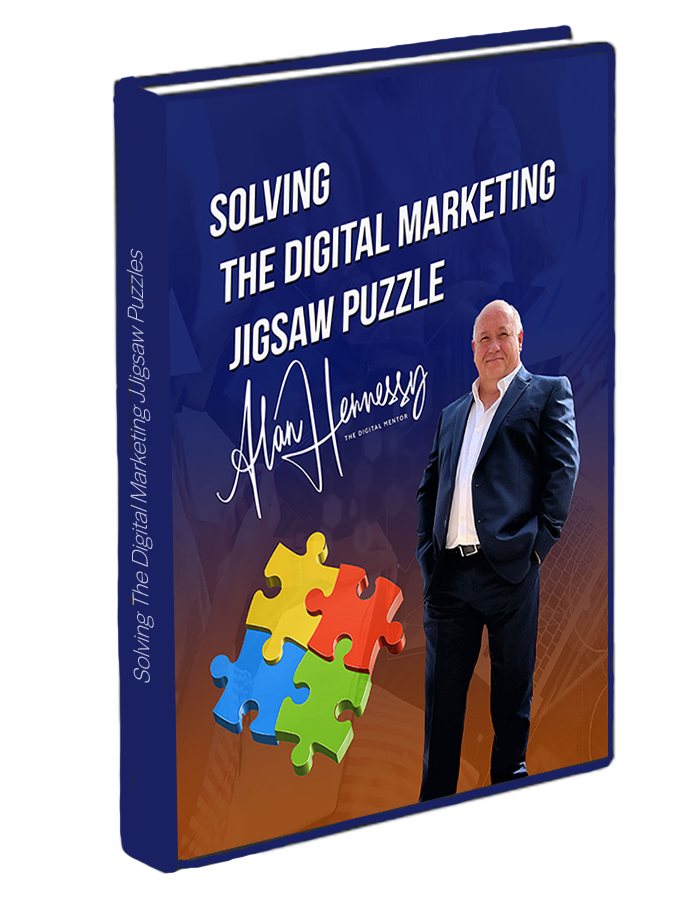
Solving The Digital Marketing Jigsaw Puzzle - Now Available
My book is a detailed guide to building your digital marketing strategies to enable you to navigate the digital landscape. Buy it now on Amazon at https://www.amazon.com/Solving-Digital-Marketing-Jigsaw-Puzzle-ebook
For more details about the book click here
The Social Media Talks Podcast
To listen to our weekly Podcast, Click on this link Social Media Talks Podcasts
Subscribe to the Podcast on your preferred Podcast Provider, so you never miss an episode.
Find out where you can subscribe on our sister site website Kompass Media Podcast Page